
WELCOME BONUS 300%
UP TO €2000 + 100
FREE SPINS
UP TO €2000 + 100
FREE SPINS
Home → Blackjack
Blackjack at 7Reels Casino: Variants, Rules and Payouts
Statistics display saves the last 100 rounds
The statistics feature records the most recent 100 rounds of gameplay, providing a limited window into immediate session history. This snapshot excludes earlier results, meaning long-term trends or cumulative performance metrics remain inaccessible to the player during active play. Users relying on this display for real-time analysis must accept that historical data beyond the current hundred hands is permanently lost from the view. Consequently, strategic adjustments based on extended patterns cannot be validated using only this tool.
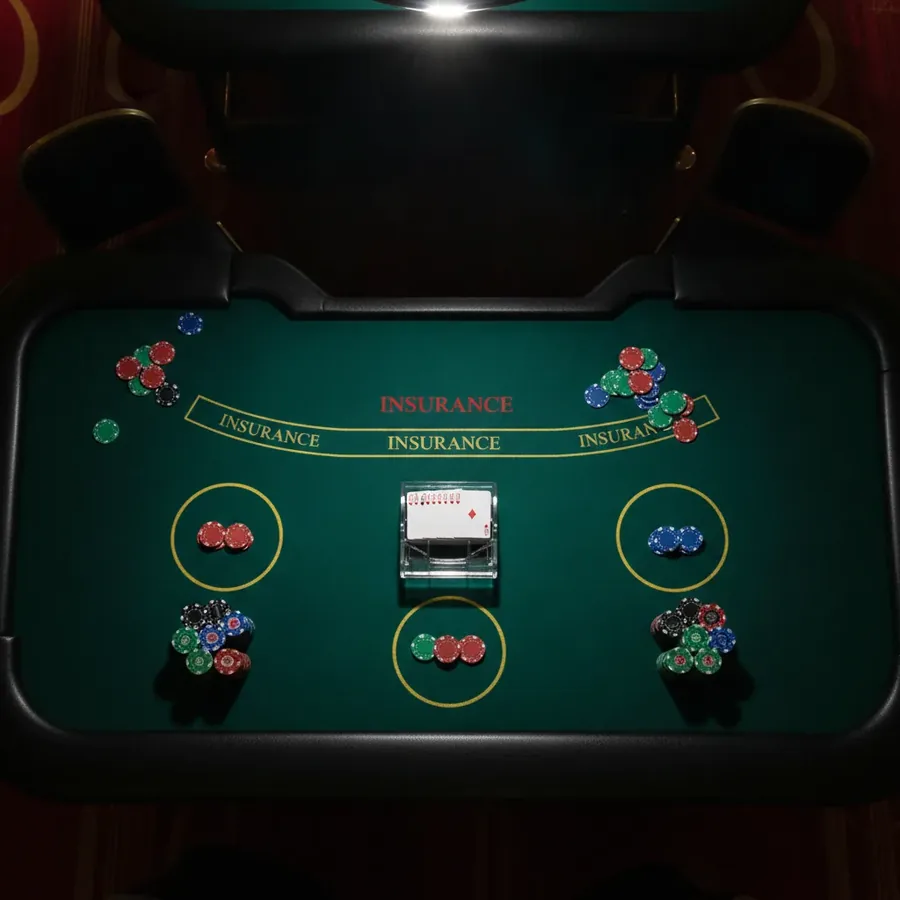
Insurance vs Even Money on Own Blackjack
Insurance is a side bet paying 2:1 if the dealer holds a ten-value card, but it carries a steep house edge of 7.47 percent across six to eight decks. Choosing even money on a natural blackjack guarantees a 1:1 payout immediately, which mathematically equates to taking insurance when the dealer shows an ace. Accepting either option reduces the overall return because the standard win pays 3:2, preserving the base RTP of 99.54 percent for the main hand. The decision to decline remains optimal unless the player utilizes advanced card counting techniques with a true count of three or higher.
Six Card Charlie Pays Immediately with Six Cards
A six-card Charlie rule triggers an automatic win when a player draws exactly six cards without exceeding twenty-one, bypassing the need to beat the dealer's final total. This specific condition often appears in variant tables where standard payouts might otherwise favor the house through stricter drawing requirements. Players targeting this outcome must manage their bankroll carefully, as accumulating six low-value cards consumes multiple betting units before securing the payout. The strategy requires precise hit decisions to avoid busting while maximizing the probability of reaching the six-card threshold.
Which table limits suit 20 EUR balance?
Infinite Blackjack at Evolution allows entry with a minimum stake of one euro, making it accessible for players managing a tight twenty euro bankroll. This table supports up to five thousand euros per round, offering high flexibility despite the low barrier to entry for small balances. In contrast, Lightning Blackjack requires a minimum bet of one euro but caps at two thousand five hundred euros, limiting exposure for larger wagers. Both options permit unlimited seats, allowing players to join without waiting for a physical seat to open at crowded virtual tables.
Bonus Lost Due to 10 Percent Contribution
Table games contribute only ten percent toward fulfilling the wagering requirement for the 300% welcome bonus up to two thousand euros plus one hundred free spins. Playing Infinite Blackjack, which contributes at this reduced rate, means every two hundred euros wagered counts as merely twenty euros toward the target turnover. To clear a four thousand euro wagering requirement solely through blackjack, a player must place eight hundred euros in actual bets instead of the expected four hundred. Slots are excluded from this penalty, contributing one hundred percent, so switching games drastically alters the time needed to unlock withdrawal eligibility.
Blackjack variants at a glance
| Variant | Payout | House edge | Rule | Bet range |
|---|---|---|---|---|
| Blackjack Split / Double / H17 – Regel-Effekte | n.a. (Regel-Modifikatoren) | H17 +0.22 Prozentpunkte; RSA −0.08 Prozentpunkte; DAS −0.14 Prozentpunkte | Dealer Hits Soft 17 verschlechtert RTP um 0.22 Prozentpunkte; Resplit Aces verbessert um 0.08 Prozentpunkte; Double After Split verbessert um ca. 0.14 Prozentpunkte; 6 Decks statt 8 – ca. 0.02 Prozentpunkte. | Double – Einsatz ×2 mit einer Karte; Split – bis 4 Hände; Ass-Split meist mit einer Karte. |
| Blackjack Insurance / Versicherung (6–8 Decks) | 92.53% | 7.47% | Separate Nebenwette bis 50% der Hauptwette, wenn der Dealer ein Ass hat. Basisstrategie schreibt IMMER Ablehnung vor (außer Karten zählen bei True Count ≥ +3). Bei einem Deck Vorteil ≈ 5.88% | Insurance 2:1 |
| Blackjack Auszahlung 6:5 statt 3:2 (6 Decks) | 98.15% | 1.85% | Ersatz von 3:2 durch 6:5 fügt exakt +1.39 Prozentpunkte zum Vorteil des Casinos hinzu – stärker als jede andere Regeländerung. Bei $10 Einsatz zahlt Blackjack $12 statt $15. | Blackjack 6:5, Gewinn 1:1 |
| Blackjack Liberal Vegas Strip (liberale Regeln, 3:2) | 99.72% | 0.28% | Günstigste Regelkombination: S17 + DAS + Resplit + Late Surrender. Standardabweichung 1,15 | Blackjack 3:2, Gewinn 1:1 |
| Blackjack 6 Decks, S17, DAS, DOA, Auszahlung 3:2, Basisstrategie | 99.54% | 0.46% | Dealer steht auf Soft 17; Verdopplung auf jeder Zweierkarte; Verdopplung nach Split erlaubt; keine Aufgabe. Basisstrategie ist für diesen Wert zwingend | Blackjack 3:2, normaler Gewinn 1:1, Insurance 2:1 |
| Blackjack Ein Deck, klassische Regeln, 3:2 | 99.85% | 0.15% | Weniger Decks = niedrigerer Vorteil; ein Deck gibt ca. −0.48 Prozentpunkte gegenüber 8 Decks. Oft durch 6:5 Auszahlung kompensiert. | Blackjack 3:2, Gewinn 1:1 |
Six Decks to Eight Decks in the Shoe
Blackjack 6 Decks, S17, DAS, DOA delivers an RTP of 99.54% with a house edge of 0.46%, establishing the baseline for this variant. This figure improves by approximately 0.48 percentage points compared to eight-deck games, where reduced card removal effects favor the player. Consequently, the theoretical return is higher on six decks, though players must strictly adhere to basic strategy to maintain this advantage.
Single-deck blackjack offers a superior RTP of 99.85% and a house edge of only 0.15%, representing the lowest casino advantage available. However, this benefit is often neutralized by restrictive rules such as 6:5 payouts or limited doubling options found in classic versions. Players seeking optimal returns must verify that the single-deck game retains standard 3:2 payouts to realize the full mathematical benefit.
Infinite Blackjack provides an RTP of 99.47% while accommodating unlimited seats at tables operated by Evolution. The game structure mirrors traditional multi-deck shoes but removes physical constraints, allowing for faster decision-making cycles. This efficiency reduces time spent per hand, potentially increasing hourly action volume for high-stakes participants.
No Double Down on three cards
The rule permitting double down after split (DAS) reduces the house edge by 0.14 percentage points relative to games forbidding this action. Allowing additional doubling increases player flexibility and lowers the overall casino advantage across the session duration. This specific modifier contributes significantly to the favorable 0.46% house edge observed in the six-deck variant analyzed here.
Restrictions limiting doubling to two-card hands eliminate a key strategic tool, effectively raising the cost of play for the participant. Without DAS, the ability to capitalize on strong starting totals diminishes, altering the expected value calculations for common scenarios. Players relying on aggressive doubling strategies will find their long-term returns suppressed under these constrained conditions.
Standard strategy dictates doubling on specific totals like nine, ten, or eleven against weak dealer up-cards to maximize profit potential. When this option is restricted to initial deals only, the frequency of optimal plays decreases substantially during active gameplay. This limitation forces conservative betting patterns that erode the theoretical RTP over extended playing periods.
Clicked Too Late: Hand Is Automatically Held
Lightning Blackjack allows bets ranging from 1 EUR to 2,500 EUR, offering multipliers up to 25x on winning hands. The requirement to act promptly ensures fair distribution of these high-variance bonuses across all active participants simultaneously. Delayed input results in automatic holding, preventing late entries from influencing the multiplier allocation process.
Side bets such as Any Pair, 21+3, Hot 3, and Bust It are available on Infinite Blackjack tables alongside main game wagers. These optional wagers introduce independent variance mechanisms that operate separately from the primary blackjack outcome logic. Participation requires explicit selection before the deal commences, with no retroactive adjustments permitted once cards are distributed.
Evolution’s live dealer interface enforces strict timing windows for each betting phase to maintain game flow and integrity. Missing these deadlines triggers automatic decisions based on default strategy or previous hand states depending on the specific game mode. This automation prevents delays that could disrupt the streaming feed or disadvantage other players at the virtual table.
Side Bets Increase House Edge to 5 Percent
Blackjack Insurance carries a steep house edge of 7.47% due to its unfavorable payout structure relative to true probability. This side bet pays 2:1 when the dealer reveals a natural blackjack, but statistically favors the house by a wide margin. Basic strategy mandates always rejecting insurance unless counting cards reveal a true count of +3 or higher.
The Insurance wager permits stakes up to 50% of the original main bet, providing exposure to dealer hole card outcomes. While the immediate payout appears attractive, the long-term retention rate significantly erodes bankroll sustainability for average players. Mathematical models confirm that consistent participation in this market yields negative expected value over thousands of hands.
Single-deck variants exhibit a slightly lower insurance house edge of approximately 5.88% compared to multi-deck configurations. Despite this improvement, the recommendation remains to decline the bet absent a positive count indicating deck depletion. Relying on intuition rather than statistical analysis typically results in substantial losses exceeding the initial stake amount.
When can you increase your bet?
Table stakes allow bets between 1.00 EUR and 1,000 EUR on Blackjack Party, defining the maximum exposure per round. Participants may adjust their wager size between consecutive hands to align with current bankroll levels or confidence intervals. This flexibility enables strategic scaling without requiring new deposits mid-session.
Bonuses contribute differently to wagering requirements, with table games accounting for only 10% toward turnover targets. Consequently, increasing bets on blackjack generates bonus clearance progress much slower than equivalent wagers on slots. Players prioritizing bonus withdrawal should allocate most funds to slot machines rather than table games.
Live dealer limits permit wagers up to 5,000 EUR on Infinite Blackjack, catering to high-roller segments seeking larger scale action. The expanded ceiling accommodates aggressive staking strategies while maintaining operational safety protocols for both operator and player. Such limits require verification of identity and source of funds prior to activation of premium tiers.
Soft 17: Dealer Hits or Stands
The rule variation where the dealer hits soft 17 increases the house edge by exactly 0.22 percentage points compared to standing rules. This mathematical disadvantage directly reduces the theoretical return-to-player rate for every hand played at these tables. Players facing this condition must adjust their strategy, as the increased volatility demands more conservative betting decisions.
Conversely, a dealer standing on soft 17 improves the player's odds by approximately 0.08 percentage points relative to the hitting variant. This specific rule modifier lowers the overall house advantage, making the game statistically more favorable for skilled participants. The difference between hitting and standing creates a measurable gap in long-term expected value.
Resplitting Aces provides an additional improvement of about 0.08 percentage points to the player's return when permitted. Combining this with doubling after split enhances the odds further by roughly 0.14 percentage points. These combined rule benefits can offset some of the negative impact from other less favorable table conditions.
Infinite Blackjack vs Classic Seven-Seat Table
Infinite Blackjack offers unlimited seating positions at a single virtual table, accommodating significantly more players than traditional setups. This format allows for continuous action without waiting for a seat to open up during peak hours. The game maintains a high RTP of 99.47% while providing flexibility for individual play styles.
Classic seven-seat tables restrict participation to a maximum of seven individuals simultaneously, creating potential wait times during busy periods. This limitation contrasts sharply with the infinite model, which removes physical seating constraints entirely. Players seeking immediate access to gameplay often prefer the unrestricted nature of the infinite variant.
Both formats support side bets like Any Pair and 21+3, but Infinite Blackjack includes four distinct options including Hot 3 and Bust It. These additional wagering opportunities increase the total action available per hour compared to standard tables. The presence of multiple side bets diversifies the risk profile for active participants.
Bust at 22: Stake Lost Immediately
Standard blackjack rules dictate that any hand exceeding 21 results in an immediate loss of the entire stake placed. This fundamental mechanic ensures that busting is always a losing outcome regardless of the dealer's final hand value. The rule applies uniformly across all variants, including those with liberal Vegas Strip configurations.
Some specialized variants may introduce unique payout structures, but the core principle remains that overbusting forfeits the bet instantly. This immediate loss mechanism prevents any ambiguity regarding the status of hands totaling above twenty-one. Players must strictly adhere to basic strategy to minimize the frequency of these automatic losses.
Insurance bets offer a separate 2:1 payout if the dealer has a blackjack, but they do not protect against busting. Wagering on insurance when the dealer shows an ace carries a high house edge of 7.47% in most decks. Avoiding insurance unless counting cards is the optimal approach to preserve bankroll longevity.
What a Natural Blackjack Practically Pays Out
A natural blackjack paying 3:2 returns 150 EUR for every 100 EUR wagered, representing the standard industry payout. This ratio ensures that winning hands provide substantial rewards relative to the initial investment made by the player. Games adhering to this payout structure are generally more favorable for long-term profitability.
Tables offering 6:5 payouts only return 120 EUR for a 100 EUR bet, adding exactly 1.39 percentage points to the house edge. This reduction in payout is more detrimental than any other single rule change available at typical casinos. The financial impact is severe, effectively turning a premium game into a high-risk proposition.
The difference between 3:2 and 6:5 payouts creates a significant gap in expected value for consistent players. Choosing games with the higher 3:2 ratio preserves more of the original bankroll over time. Selecting the correct payout structure is critical for minimizing the casino's mathematical advantage.
Splitting Eights vs Standing on 16
Basic strategy mandates splitting pairs of eights regardless of the dealer's upcard to avoid a guaranteed loss scenario. Standing on a hard 16 is statistically inferior because it leaves the player vulnerable to dealer improvements. Splitting transforms a weak hand into two potentially stronger starting positions for new rounds.
Doubling after split allows players to double their bet on each resulting hand, increasing potential returns significantly. This rule enhancement improves the player's odds by approximately 0.14 percentage points when available. Utilizing DAS effectively requires careful assessment of the new hand values formed after the split.
Late surrender permits players to forfeit half their bet after checking for dealer blackjack, improving RTP by 0.08 percentage points. This option provides a safety net for weak hands like 16 against strong dealer upcards. Combining surrender with splitting strategies maximizes the efficiency of bankroll management.
Contact
Live - online chat
Banking









Providers












7Reels Casino 2026